The idea
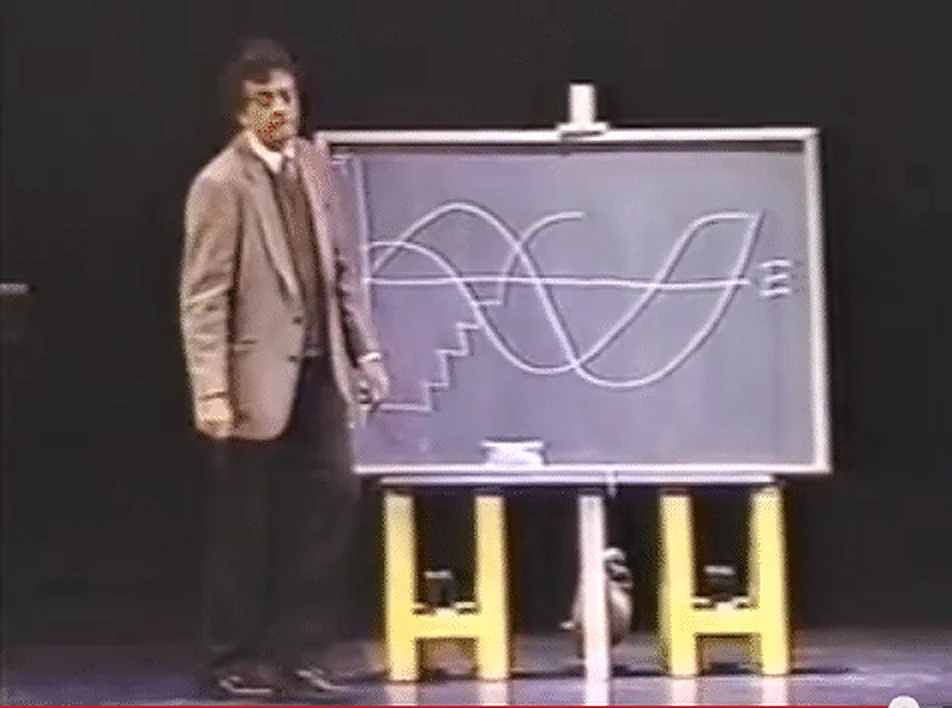
We love stories. We read, listen, and watch them for fun. It's by accident they become our obsession. We have Kurt Vonnegut to thank most. His simple idea captivated us.
Every story has a shape.
The building blocks
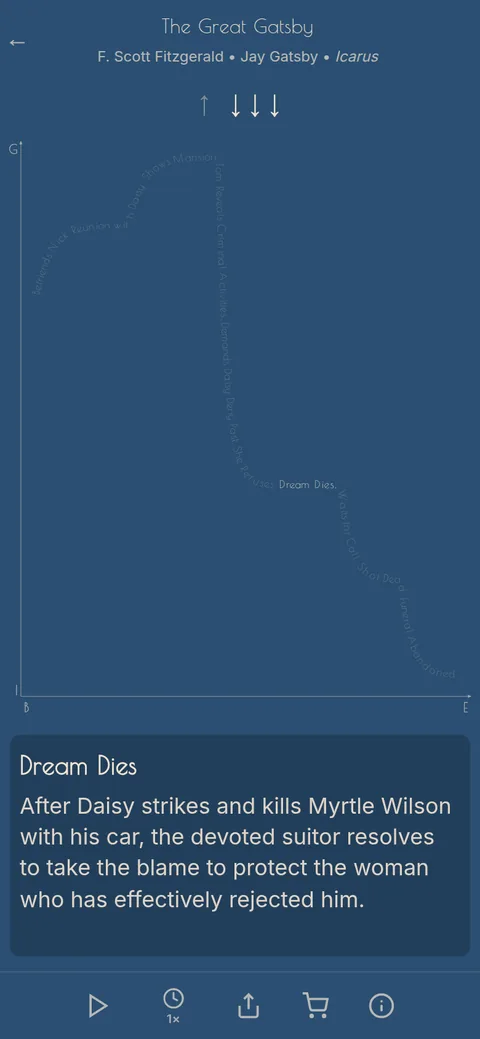
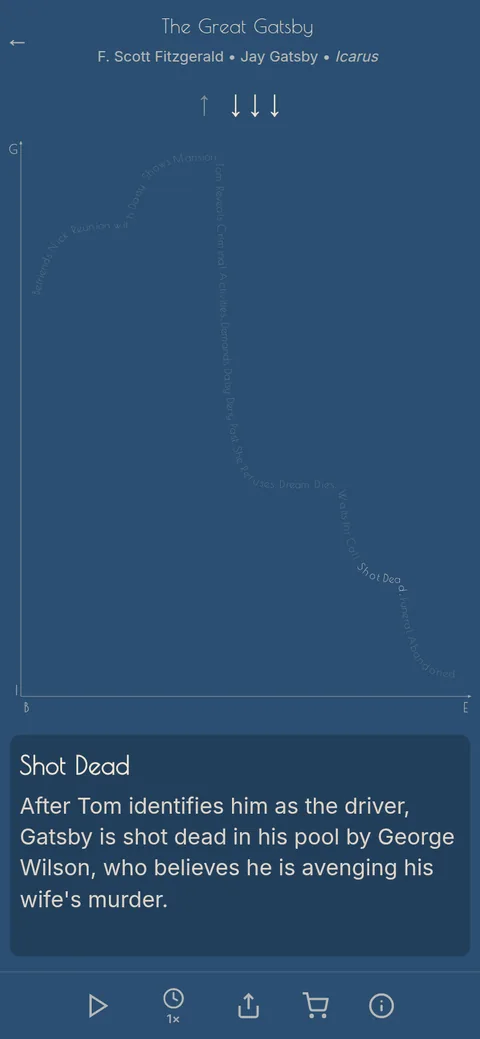
Every story can be drawn on a simple graph.
The horizontal (BE) axis is Time, from Beginning to End.
The vertical (GI) axis is Fortune. Good is up, Ill is down.
A character's journey is made of a few simple movements.
↑
Rise: A change for the better. The more arrows (↑↑, ↑↑↑), the more sudden and dramatic the rise.
↓
Fall: A change for the worse. The more arrows (↓↓, ↓↓↓), the more sudden and catastrophic the fall.
→
Stasis: No change.
A few common shapes
History never repeats but it does rhyme. The same is true for stories.
Rags to Riches
↑
A steady rise from humble beginnings to success.
From Bad to Worse
↓
A steady decline ending in catastrophe.
Man in Hole
↓↑
Fall into trouble, then climb back out.
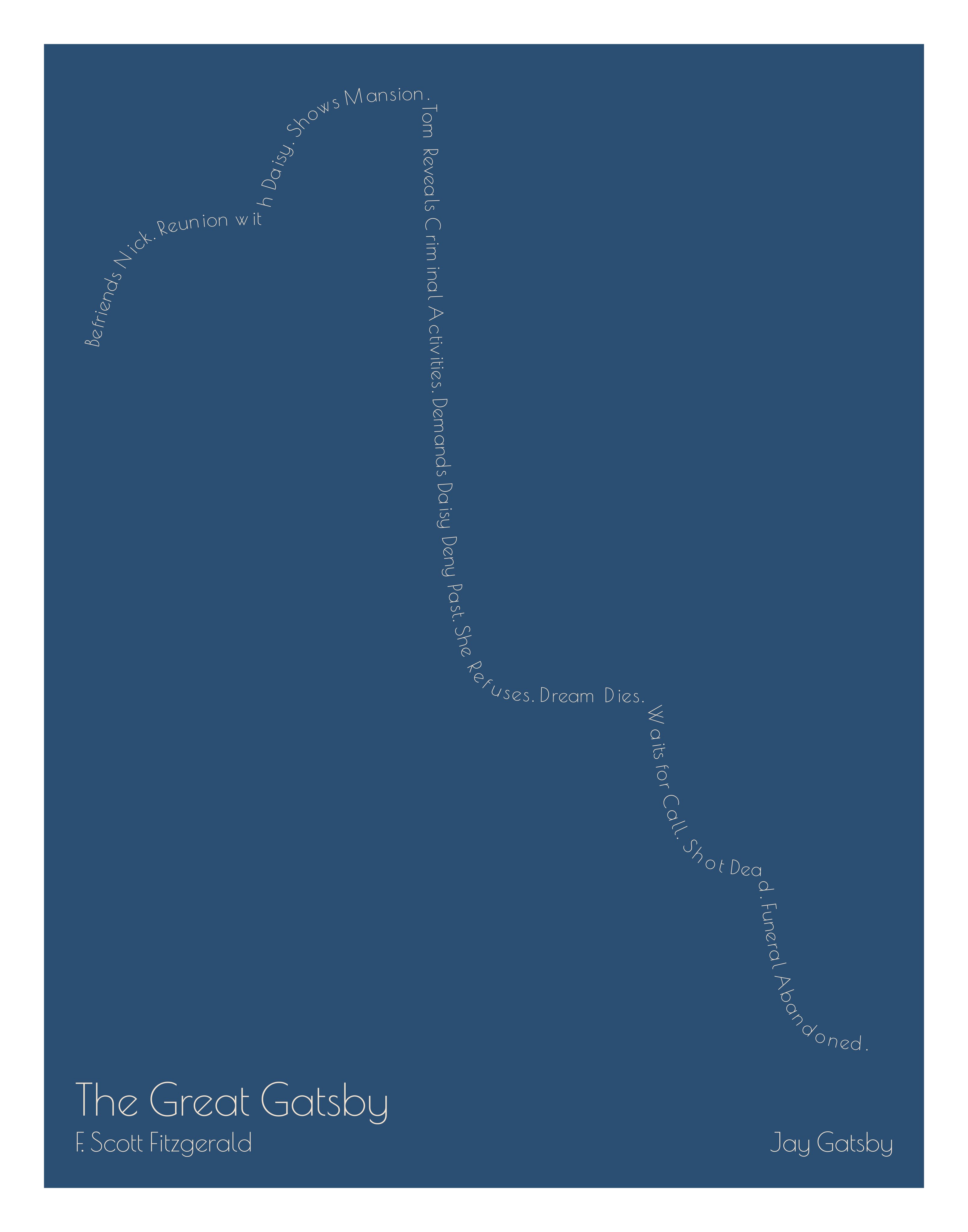
Icarus
↑↓
Rise to great heights, followed by a dramatic fall.
Boy Meets Girl
↑↓↑
Boy meets girl. Boy loses girl. Boy gets girl back.
Oedipus
↓↑↓
Fall, rise, then fall again.
Complex
. . .
Not every story follows a simple arc. Some weave together multiple patterns, creating something uniquely complex.
How we make each design
Every shape is made by hand. We read the whole book, focused on the story’s protagonist.
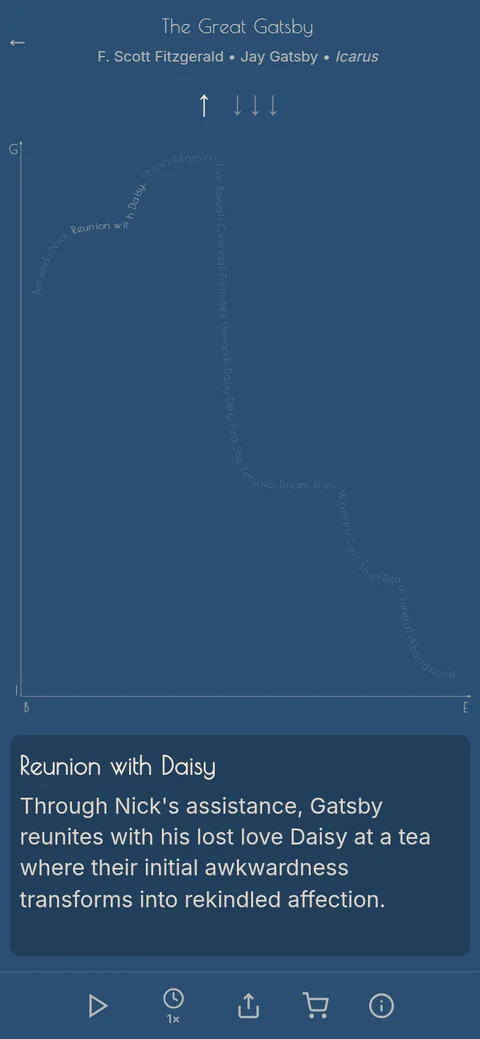
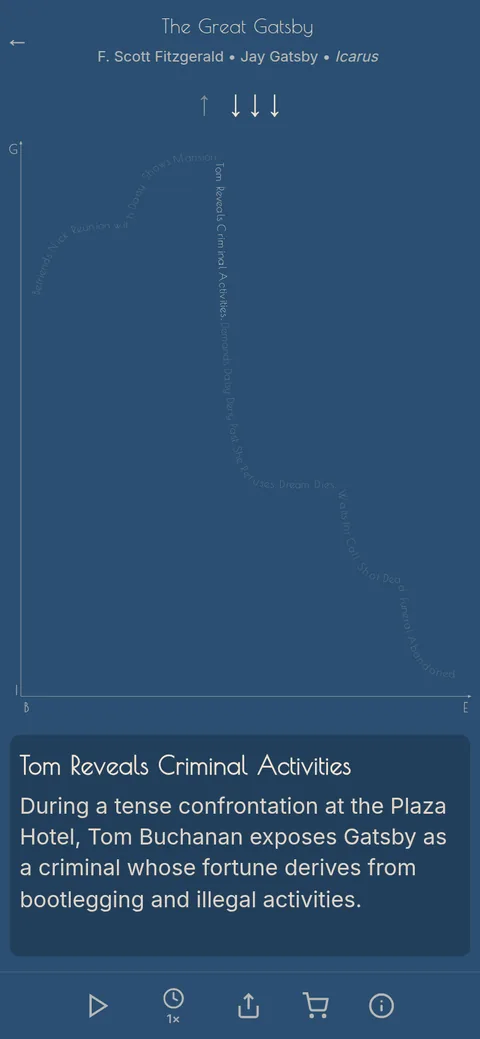
Prints are interactive
Every print comes with a small NFC tag that connects it to a digital version you can explore. Here’s how to set it up.
Nothing happens.
Do I need an app?
Do I need internet?
I have more than one print.
My phone has no NFC.
Is the tag safe?
The Library
Every shape we have made lives in the Library. Wander the shelves and find your next one, by book, by author, or by the shape of the story itself.
Explore the Library Shop the collection